 Mushroom Matter
sharing mushroom news with care
Mushroom Matter
sharing mushroom news with care
Menubar








Mushroom Matter
Welcome on our platform. Why MUSHROOM MATTER? Because mushrooms play an important role in our lives as well in business. Our goal is to bring the world the very latest mushroom news with the upmost care to support the positioning of our beloved Mushroom.
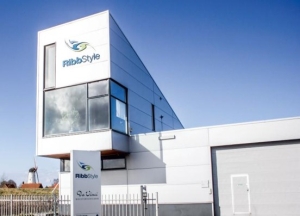
The opening of our new branch in Gujarat, India, is a wonderful moment for RibbStyle. Owner Martijn Meeuwse was present to officially open the doors together with the team.
The new office demonstrates what we stand for: working close to our partners and customers, with room for innovation, quality, and collaboration. During the visit, there was an energetic atmosphere, with a team ready to build the next steps together.
Moreover, Gujarat is an important region for the mushroom industry, a sector in which RibbStyle has been active for many years. Our specialized coatings are used worldwide to ensure hygienic, safe, and easy-to-clean cultivation environments. From Gujarat, we can support growers and suppliers in this fast-growing market even better with knowledge, service, and products tailored to local conditions.
With this location, we are taking a solid step forward. From our new branch, we can capitalize even better on opportunities in the region and continue to grow, develop, and create, together with the mushroom sector and other industries that require sustainable, reliable coatings.
GrowTime at NAMC 2026 in Montreal – innovations that boost efficiency and profitability
From June 4–6, 2026, Montreal will host the 27th edition of the North American Mushroom Conference — one of the most important events for the mushroom industry in North America. The conference brings together growers, experts, and industry leaders to exchange knowledge and discover the latest technologies supporting modern mushroom cultivation.
We are proud to announce that GrowTime will also be among the exhibitors, showcasing its solutions for professional mushroom farms. At our booth, visitors will have the opportunity to see our modern mushroom harvesting trolleys and innovative technologies designed to improve efficiency and working comfort. It will be a great chance to explore our products up close, meet the GrowTime team, and connect with mushroom industry professionals from around the world.
If you are interested in the future of modern mushroom production, this is an event you should not miss. And that’s not all… GrowTime has just entered a new market and expanded into another country. More details will be announced soon!
More about our presence at the conference here: GrowTime at NAMC 2026 in Montreal
Casing Management and Mushroom Size and Quality
As most growers know, our mushroom is a slow-growing and very sensitive organism. It is very susceptible to changes to its environment, growing substrate, or competitors. Whether it is just the nature of the fungus or the fact that our mushroom is such a slow-growing organism, it is extremely sensitive to environmental or nutritional stress. Most likely, it is a combination of the two.
The only time in the mushroom's life cycle during which it grows quickly is during the rapidly expanding stage of the pin development. During this time, it becomes even more sensitive to environmental or crop-management changes. The final fresh mushroom quality characteristics are greatly influenced during this, what I call, the Rapid Expanding Stage (RES).
At the end of this developmental stage, just before harvesting, the mushroom pumps most of its food and water from the compost into itself over about 24 h. To efficiently accomplish this incredible task, the mycelium and rhizomorphs in the compost and casing must be properly created and maintained. Therefore, it is critical to establish an efficient system for the creation, adsorption, and movement of food and water during the composting, spawn growing, and case run periods.
Furthermore, because the mushroom is so sensitive during the RES, the grower must maintain a steady environment and watering management scheme.
Fresh mushroom quality involves every detail and every person from Phase I through packaging. The primary goal of the mushroom grower seeking optimal fresh quality is to create a substrate, environment, and growing conditions that reduce stress on the sensitive mushroom.
The mycelium in the compost absorbs nutrients during the spawn growing period, then begins to pump them up into the mushrooms during pinning and harvesting. Therefore, Phase I and II composting becomes the critical component to enable the mushroom to efficiently adsorb and pump the food and water. It is the grower’s responsibility to “prime the pump” for the mushroom.
After casing, the goal is to create and maintain proper rhizomorph formation to efficiently transport water and nutrients into the mushroom, especially during the RES.
The late Dr. Jim Sinden described this transport of dissolved nutrients from compost through the casing to the developing mushroom as a 'pipe system'. The spawn growth in compost creates a “pipe system” for the movement of food and water, and the rhizomorphs in the casing are larger “pipes” designed for the rapid transportation of nutrients and water.
Several factors for improving the pipe system include balanced compost nutrition, proper temperatures, and optimum compost and casing moisture. Alternatively, those factors interfering with the pipe system, such as insects, nematodes, bacteria, viruses, or fungi, must be controlled.
The most critical factor is casing moisture, which is necessary to keep the pipes feeding the mushroom in good working order.
The most critical stage of the mushroom’s development is during the RES, where the mushroom doubles in size every 24 hours. This expansion stage depends on compost temperature, compost moisture, and casing.
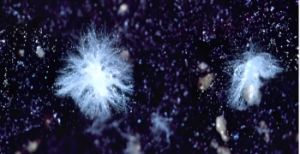
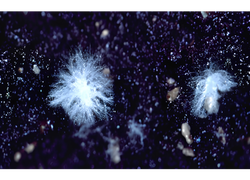
The mushroom expends a tremendous amount of energy to rapidly biosynthesize and transport essential structural components, such as mannitol. This flow of nutrients is occurring at a rapid rate during the RES of the mushrooms' development, and the efficiency of this nutrient and water transportation is dependent on the type and quality of the rhizomorphs in the casing layer, Figure 1.
It is the grower's responsibility to manage the casing so that rhizomorphs are well constructed and maintained.
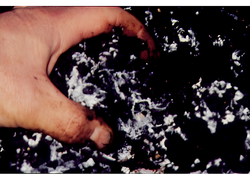 Figure 1. Proper rhizomorph formation is critical for the flow of water and nutrients into the developing mushroom.
Casing Management
The function of the casing layer is, quite simply, to trigger the mushroom to switch from vegetative to reproductive (fruiting) growth. The casing also functions to supply and retain moisture for the mushroom, and the rhizomorphs transport dissolved nutrients to the mushrooms.
The Water Holding Capacity (WHC) is often described as an important characteristic of the casing layer, and it is, in fact, a valuable fact to know about your casing material. Another harder-to-measure, less well-known factor is Water Availability (WA), which describes how readily water is released from a substrate.
As far as a mushroom is concerned, it is the water giving up ability, not water holding capacity, that characterizes a good casing substrate.
A continuum of common casing materials that have the most to least WA would be something like:
Soils > Spent Mushroom Substrate > Black Peats > Sphagnum Peat
The synthetic gels or polymers, although they hold more than 10 times their weight in water, have a very poor water-giving-up ability. pH buffering materials, like sugar beet lime or marl, may help to increase the water-giving-up ability of sphagnum peats.
What is important to remember is that the better the WA of the casing material, the more efficient the rhizomorph system that is likely to form, and the easier it is for the grower to maintain this pipe system during production.
Insects, pests, nematodes, bacteria, virus, and Trichoderma are some of the more common pests that interfere with an efficient pipe system.
Mushroom Size
Mushroom size is primarily determined by the number of pins that develop at a break or flush. After that, size can be influenced by how the crop is prepared and managed, and if the room’s environment will maximize mushroom size.
This crop management must occur earlier, not later, because once the pins are “pea-size,” it has already been determined how big the mushroom will get, and it’s too late to influence the outcome.
The best Portobello growers are those who have learned to manage the pin set to achieve enough pins for a good yield, but more importantly, only the right amount of pins to produce the largest mushrooms for their Portobello market.
Other factors affecting size include casing depth and moisture. As these two factors increase, so does size, but there is an economic limit to how deep the case can be and its influence on size.
Compost moisture, as normally encountered at most farms, will not influence size, but has more influence on fresh quality. It has been reported that adding spawn supplements to a moist compost will increase yield and size, whereas adding them to a dry compost will only increase yield.
Environmental manipulation of temperature, humidity, air flow, and CO2 also influences pin development. However, there is disagreement among growers and researchers over whether high or low humidity levels or the evaporation rate influence pin development.
Either too high or too low relative humidity after flushing will negatively influence pinning or pin development, and thus mushroom size.
Compost dry weight is closely related to mushroom size. The more compost that is filled per ft² or m² at spawning or casing time, the larger the mushrooms.
However, this phenomenon is more involved than just the amount of food per area. It has been reported that low dry weights with more supplements added at spawning will increase yield but not mushroom size.
Some say the earlier the crop is cased, the smaller the mushrooms, while others have suggested just the opposite.
Obviously, the timing of the water application affects the number of pins that develop, thereby influencing mushroom size. Water management during flushing, clumping, primordia formation, and pinning will determine the mushrooms' size.
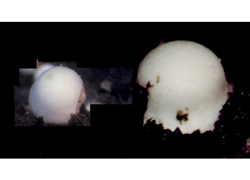
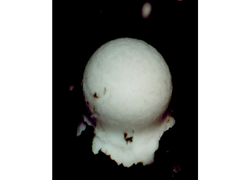
A general rule of thumb is that the earlier one waters after flushing, the fewer pins that form, increasing mushroom size. However, watering later when all the pins have fully developed will improve yield, but the mushrooms will be smaller, Figure 2.
When casing is too dry going into a break and is not receptive to water after a break, normally the mushroom size for that break will be smaller.
Once the pins are well developed (larger than a peppercorn), their size has been set, and most of the water given to the casing after that is for the next break or flush of mushrooms.
Figure 2. When water is applied at the different pin stages shown below, it has different influence on yield and size. Watering earlier (towards the left), yield will decrease but mushroom size will be increased. Watering later (towards the right), maximum yield will be achieved, but with smaller mushrooms.
CNC Substrates
CNC Holding BV Announces Strategic Integration
Under New Global Brand: CNC Substrates
MILSBEEK, The Netherlands – April 15, 2026 – CNC Holding BV, a global leader in mushroom substrate production, today announced a major strategic integration of its business units. Launching just ahead of the international Mushroom Days (April 22-24, 2026), the company will now operate under a single, unified identity: CNC Substrates.
This integration marks a significant evolution in the company’s structure, bringing together the expertise of its Agaricus Division—specializing in white and brown mushroom substrates—and its Exotic Mushroom Division. By consolidating these branches under the new CNC Substrates brand and logo, the company aims to offer a streamlined, comprehensive “one-stop shop” experience for professional growers worldwide.
One Face to the Customer
The transition to CNC Substrates is designed to simplify the customer journey. By presenting “one face” to the market, CNC Holding BV ensures that mushroom growers can access a complete portfolio of high-quality substrates through a single, professional interface.
“Our goal is to improve our customer offering by providing a full range of substrates through an integrated marketing and sales team,” says Hildo Brilleman, CEO. “Whether a grower requires substrate for the Agaricus family or specialty exotic varieties, they can now rely on a unified standard of excellence and a simplified procurement process.“
Global Logistics and Production Excellence
To support this integrated offering, CNC Substrates leverages its modern production facilities in both the Netherlands and Poland. This dual-hub strategy facilitates:
Bulk Service across Europe: Efficient, large-scale delivery to European growers.
Global Reach: First-class logistical support, including specialized refrigerated transport, allowing the company to serve professional growers on every continent.
Digital Transformation: The New CNCSubstrates.com website
As part of its commitment to service through technology, CNC Substrates is officially launching its new digital platform this week. The website, www.cncsubstrates.com, serves as a central hub for the company’s entire product range and service offerings.
In a move to consolidate its digital presence, the previous domain names—cncgrondstoffen.nl, dto-bv.com, cncexoticmushrooms.nl, and vemespecials.nl—will now be redirected to the new central site. This digital evolution ensures that customers have immediate access to technical specifications, product innovations, and grower support.
A Future as a “Centre of Excellence”
The launch of CNC Substrates is more than a rebranding; it is a commitment to becoming the “Centre of Excellence” for the global mushroom substrate industry. By focusing on rigorous quality control, technological innovation, and superior logistical services, the company continues to work toward setting the industry standard for substrate performance.
Attendees of the Mushroom Days on April 22-24 are invited to learn more about the integration and explore the new product offerings.
Come and visit us at stand 6.11 in Hall 1.
About CNC Substrates
Based in Milsbeek, The Netherlands, CNC Substrates (a brand of CNC Holding BV) is a premier provider of high-quality substrates for the professional mushroom cultivation industry. With production sites in the Netherlands and Poland, the company delivers specialized Agaricus and exotic mushroom substrates to growers globally, supported by world-class logistics and a commitment to innovation.
Media Contact:
Alex Vos
Commercial Director
This email address is being protected from spambots. You need JavaScript enabled to view it.
+31 6 18 62 79 43
www.cncsubstrates.com
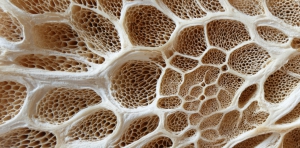
Fungi are rapidly moving beyond niche innovation into a growing global ecosystem of startups, researchers and entrepreneurs.
Initiatives like the Future is Fungi Awards highlight how early-stage ventures are being supported to translate scientific breakthroughs into real-world applications.
From mycelium-based materials to biotech solutions and alternative proteins, these startups are exploring the full potential of fungi across industries. What stands out is not only the technology itself, but the increasing focus on collaboration, mentorship and knowledge sharing.
By connecting science with entrepreneurship, platforms like this are helping to accelerate innovation and lower the barrier for new ideas to reach the market, positioning fungi as a key driver in the emerging bioeconomy.
Please read the full article here.
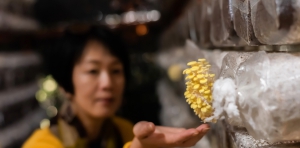
China is increasingly focusing on the modernisation of its agrifood sector, with investments in technology, efficiency and supply chain development. These developments are not limited to major crops, but also have clear implications for sectors such as mushroom production.
As the world’s largest mushroom producer, China continues to play a key role in shaping global supply. The ongoing shift towards more advanced production systems, improved logistics and higher quality standards reflects a broader transition within the sector.
While the pace and scale differ from Western markets, the direction is clear. Modernisation is becoming a central theme, influencing how production systems evolve and how the industry positions itself for future demand.
Please read the full article here.
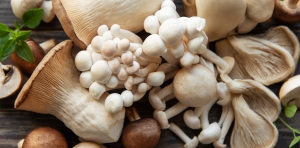
The European mushroom market continues to show steady growth, supported by changing consumer preferences and increasing demand for healthy and sustainable food options. Mushrooms are increasingly recognised for their nutritional value, versatility and relatively low environmental footprint.
Recent market insights indicate that this growth is not only volume-driven, but also shaped by diversification. While traditional button mushrooms remain dominant, there is a growing interest in specialty varieties and value-added products.
At the same time, producers are adapting to a more dynamic market, where pricing, consistency and product differentiation play a larger role. This reflects a sector that is evolving gradually, while building on a stable and well-established foundation.
Please read the full article here.
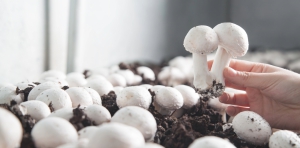
In a previous edition of Mushroom Matter Industry Insights, we explored how data, energy efficiency and robotics are shaping more integrated production systems.
In this edition, we look beyond technology alone and focus on three developments that are increasingly influencing the direction of the sector:
- labour strategy and workforce sustainability
- shifting market demand and specialty mushrooms
- collaboration across the value chain
Together, these themes highlight how the industry is evolving not only through innovation, but also through people, positioning and partnerships.
Labour strategy as a structural challenge
Labour has become one of the most defining factors in mushroom production.
Where it was once considered an operational topic, it is now a strategic issue that directly affects continuity, scalability and investment decisions.
Across the sector, growers are dealing with:
- ongoing labour shortages
- increasing labour costs
- the physical intensity of harvesting work
This is changing how farms are organised.
Instead of relying solely on availability, growers are rethinking how labour fits into the overall production system. This includes:
- redesigning workflows to reduce dependency on peak labour
- combining skilled workers with supportive technologies
- improving working conditions to retain experienced staff
Labour is no longer just about people, it is about creating a system that remains stable under pressure.
Shifting demand and the rise of specialty mushrooms
At the same time, market demand is becoming more diverse.
While traditional button mushrooms remain dominant, there is growing interest in specialty varieties such as oyster, shiitake and king oyster mushrooms.
This shift is driven by:
- changing consumer preferences
- increased focus on plant-based diets
- demand for new textures and flavours
For growers, this creates both opportunities and complexity.
Specialty mushrooms often require different cultivation methods, shorter shelf life management and more flexible production planning.
Rather than replacing existing production, they are increasingly seen as a complementary segment, allowing growers to diversify their offering and respond to changing market dynamics.
Collaboration across the value chain
Another important development is the growing need for collaboration.
The mushroom sector has traditionally been relatively fragmented, with clear separations between growers, suppliers, technology providers and buyers.
This is starting to change.
More and more, innovation and efficiency depend on how well different parts of the chain work together. This can be seen in:
- closer cooperation between growers and technology supplier
- data sharing across systems and partner
- alignment between production and market demand
Collaboration is not only about efficiency, but also about reducing risk and accelerating adoption of new solutions.
No single player can solve the current challenges alone.
Connecting the dots
What connects these developments is a broader shift in perspective.
- Labour is becoming part of system design
- Market demand is shaping production choices
- Collaboration is enabling innovation
Together, they show that the future of the mushroom industry is not defined by technology alone, but by how different elements are brought together.
A balanced way forward
The sector continues to move towards a model where:
- people and technology support each other
- production aligns more closely with market demand
- partnerships strengthen the overall system
This approach reflects a more mature phase of development, focused on balance, resilience and long-term viability.
Looking ahead
In the next edition of Mushroom Matter Industry Insights, we will explore several additional developments shaping the sector, including:
- the role of AI and data in decision-making on the farm
- new applications of fungi in materials and bio-based industries
- how automation continues to evolve in practical, farm-level use
It shows that real progress in the sector is not about moving faster, but about moving smarter, with the right balance between all elements.
Published by Mushroom Matter: connecting the global mushroom community through insight, innovation, and inspiration





