











Every breakthrough in mushroom cultivation begins with a simple question: how can we do this better? For years, growers around the world have faced the same relentless challenges, labour shortages, ergonomic strain, rising production demands and the constant pressure to maintain quality with fewer hands in the growing rooms.
Every major advancement in mushroom production begins with a familiar question: How can growers produce more, at higher quality, with less dependency on scarce labour?
Around the world, farms are facing rising labour costs, declining availability of experienced pickers, and intensifying pressure to improve yields and consistency.
These realities have accelerated the need for practical, scalable automation.
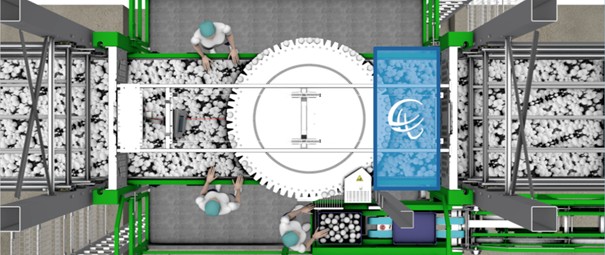
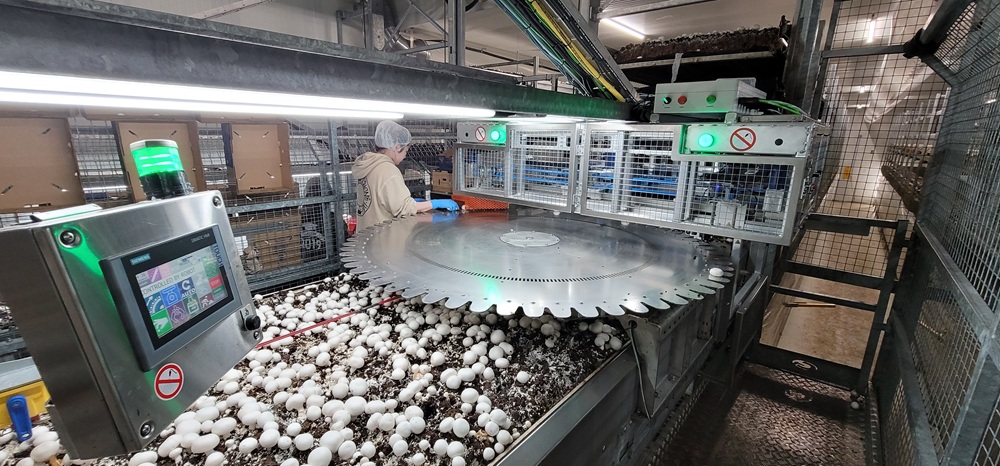
Modern infrastructure such as the Christiaens drawer system offers a strong foundation, like Henry Ford did for automobile manufacturing more than 100 years ago – assembly lines bring the product to the workers rather than moving the workers to the product.
The critical breakthrough comes from pairing that design with a robotic harvesting platform capable of real, measurable performance in commercial conditions.
That is where Mycionics, a trailblazer in mushroom robotics, has stepped forward to set a new standard.
It started with a shared challenge
Christiaens and Mycionics began from the same place as suppliers: working inside commercial farms, studying picker behavior, understanding crop variability, and listening to producers' daily frustrations, labor.
The original drawer-based harvesting concept was designed to simplify access to the crop, but real value would only emerge if automation and robotics delivered consistent performance, solved labour shortages, and protected product quality.
For Mycionics the question was clear: Could robotics not only match human pickers, but outperform traditional workflows, while improving yield, reducing waste, and making harvesting more predictable?
Real-world pilots and proof
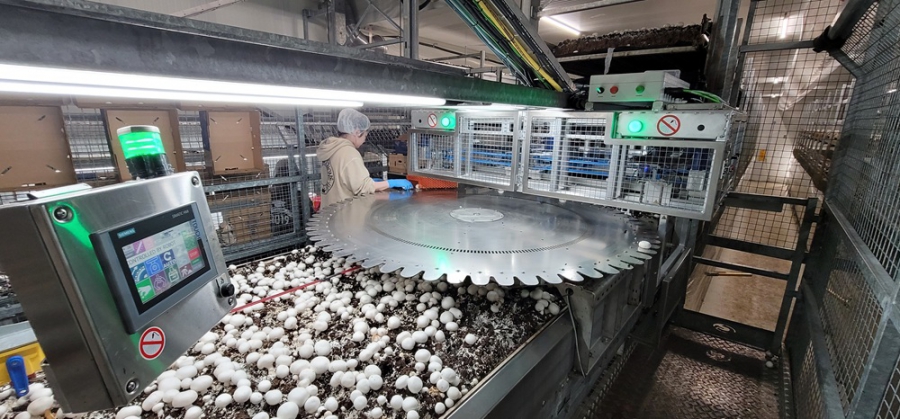
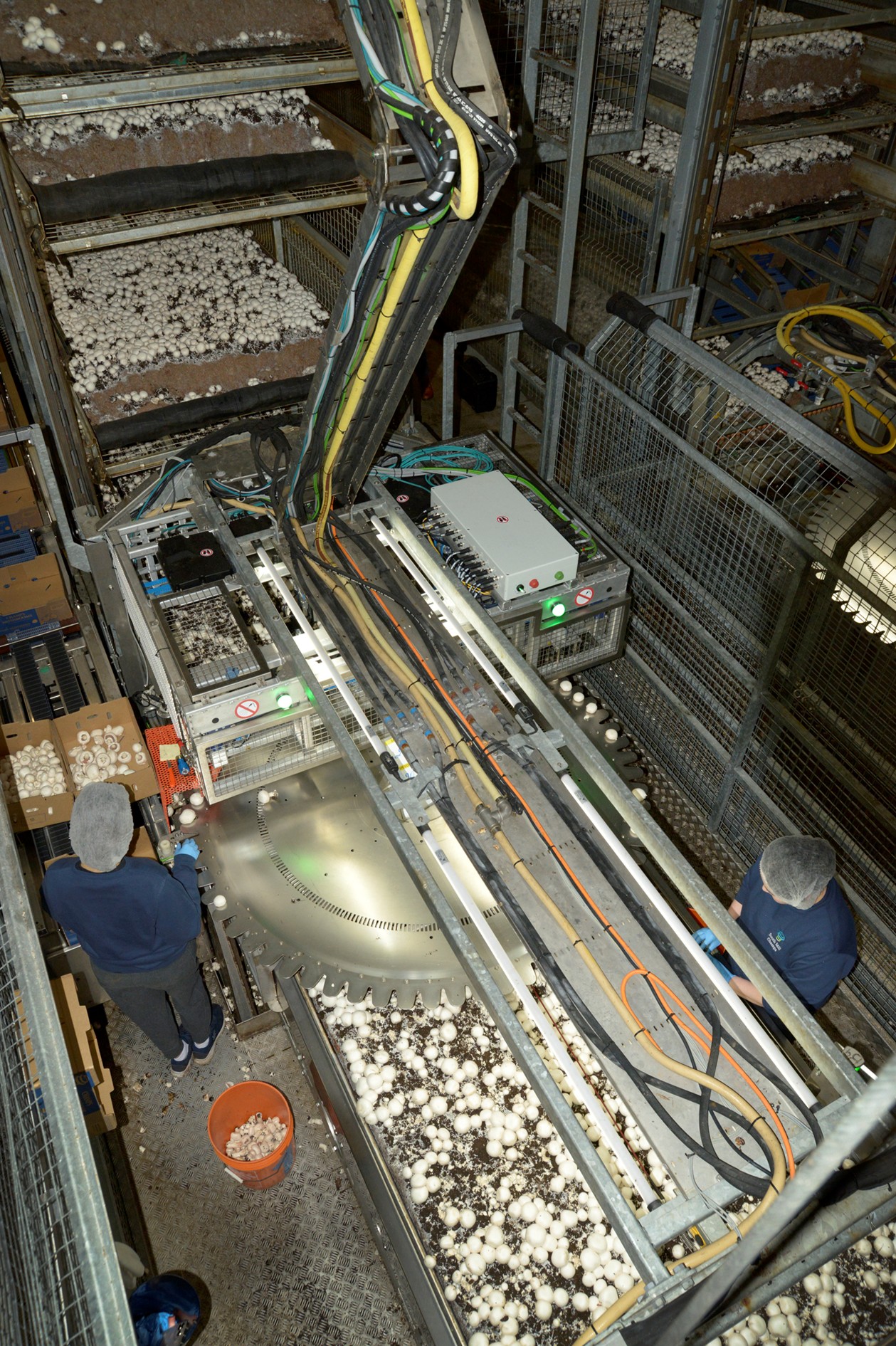
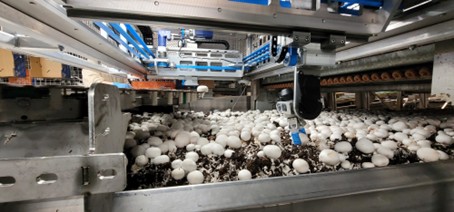
To ensure robotics would succeed in challenging farm environments, Mycionics launched intensive field-testing in 2024 at South Mill Champs’ Apex 2 facility in British Columbia, where operators quickly integrated the technology into daily workflows, even nicknaming the robotic pincers “Jessica.”
During these pilots, the robots:
- Worked side-by-side with humans through humidity swings and rapid growth cycles.
- Harvested around the clock, averaging the same performance as a human harvester.
- Proved to be intuitive to operate, maintain, and clean all within food-safe and harsh environments.
This phase proved a critical point: The market needs both automation and intelligence to move forward, and Mycionics technology is ready to deliver.
Digitizing the crop, transforming the workflow
From the earliest prototypes, Mycionics focused on one principle: automation must be crop aware.
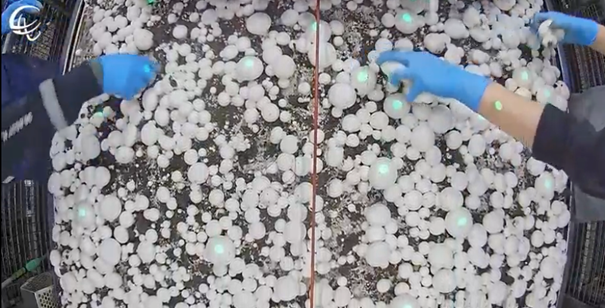
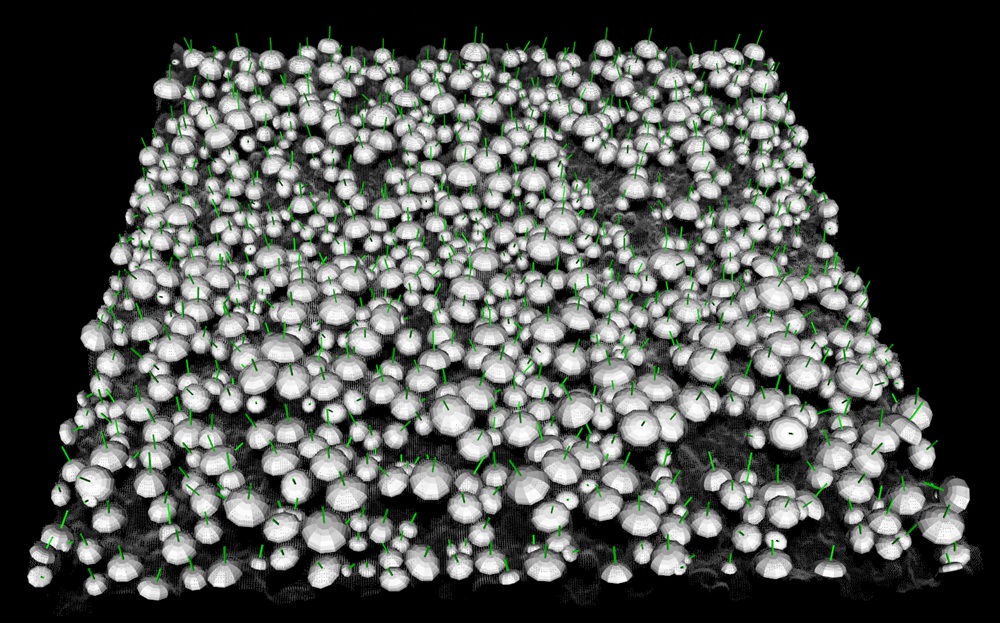
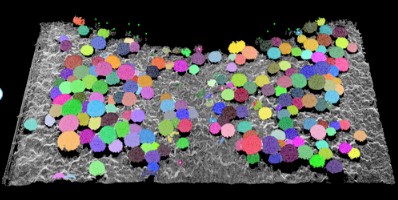
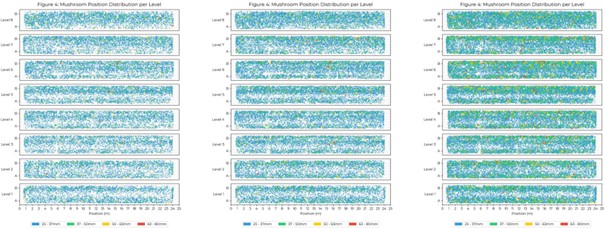
Using advanced vision systems and AI, scanning each drawer bed digitizes with up to 99% detection accuracy. The system maps each mushroom’s size, location, growth rate, and environmental signals. This enables graze harvesting, reduced waste, better watering, predictable quality, and data-driven decision making. When using manual pickers – Crop scout turns them into robots, making all the decisions for them.
Added intelligence layer
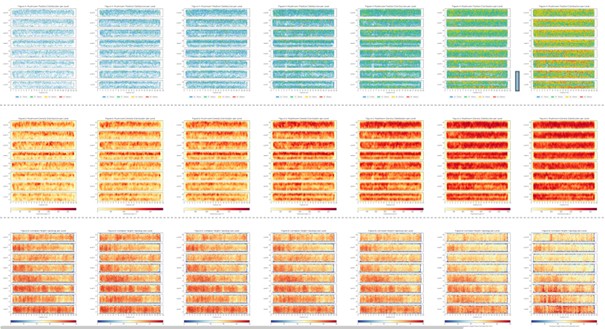
Through Crop Scout, each mushroom receives a “digital identity”, capturing its growth rate, density, microclimate, and much more. Growers gain a live crop overview, even remotely, via mobile devices.
What started as a harvesting tool is now a connected farm ecosystem.
Collaborative robotics
Recognizing that many farms aren’t prepared for, and aren’t likely to achieve full autonomy – especially in peak flush, Mycionics supports:
1. Fully autonomous harvesting and packing
2. Co-bot workflows where humans augment robotics for tasks like thinning
In traditional Dutch-shelf farm environments, Mycionics also provides solutions, including automated packing systems that reduce labour by 50% with minimal infrastructure investment.
From prototype to proven performance
Early deployment at commercial farms shows:
- Pick rate: 30 per minute during pilot, up to 80–90 ppm with 4-arm robot
- Mass harvested: ±12,000 lbs. per cycle (up from 3,550 lbs.)
- Labour replacement rate: 75% (up from 33% at first pilot) where staff support thinning
In mixed workflows, the robot can provide over two-thirds of total picking and mass rates, while optimizing where to pick and when making sure the right mushrooms are picked at the right time for maximum weight – eliminating thousands of manual picker decisions.
Designing a system for full-scale automation
The Christiaens drawer platform provides a stable, ergonomic foundation, while Mycionics adds:
- Modular Picking & packing robotics
- Integrated scanner + pointer
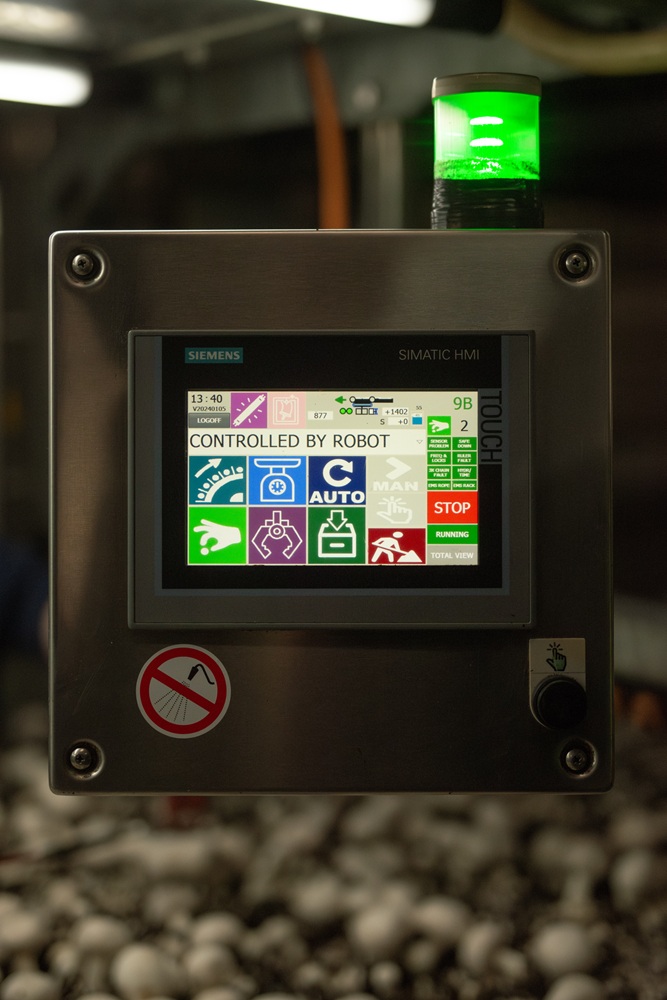
- Real-time crop intelligence with autopilot, reporting & harvest optimization
Deployment today in North America and Europe
The Mycionics modular platform is now a fully operational, commercial solution already deployed across North America and Europe, including Canada, the Netherlands demonstrating paybacks of less than 3 years.
A decade of research investment and development is now delivering measurable change in real farm environments.
The result: a new standard
Mycionics delivers:
- Up to 75% true labour reduction
- 6–12% yield improvement
- Full crop digitization with reporting and analytics
- Predictable scheduling and autopilot harvesting
- Improved work conditions
A solution with purpose
The drawer system didn’t start as a machine. It started as a challenge, one familiar to every grower. Through collaboration, field experience, and a shared drive for smarter farming, Christiaens Group and Mycionics turned a concept into a reliable, field-ready harvesting solution.
Because innovation isn’t only about technology. It’s about transforming the way farms work. And sometimes, the biggest leap forward begins with going back to first principles and rethinking the way we grow and pick mushrooms from the start.
https://www.mushroommatter.com/global-news/item/1046-from-concept-to-capability-how-integrated-robotics-are-redefining-mushroom-harvesting#sigProId793fdfb9bd





